

Production Additive Manufacturing for Functional Metal Parts
Online Custom 3D Printing Service
Produce functional metal parts with internal channels, lattice structures and consolidated assemblies that are difficult to make conventionally. TigerHubs supports DfAM review, SLM production, CNC finishing and inspection for prototypes and repeat low-volume orders.
- ISO 9001:2015
- ISO 13485:2016
- AS9100D
- ITAR
Metal 3D Printing Capabilities
From rapid prototyping to functional metal parts, TigerHubs provides metal additive manufacturing solutions for complex geometries, lightweight structures, and low-volume production. Our engineers select the appropriate process based on material, part geometry, accuracy, mechanical performance, and production requirements.
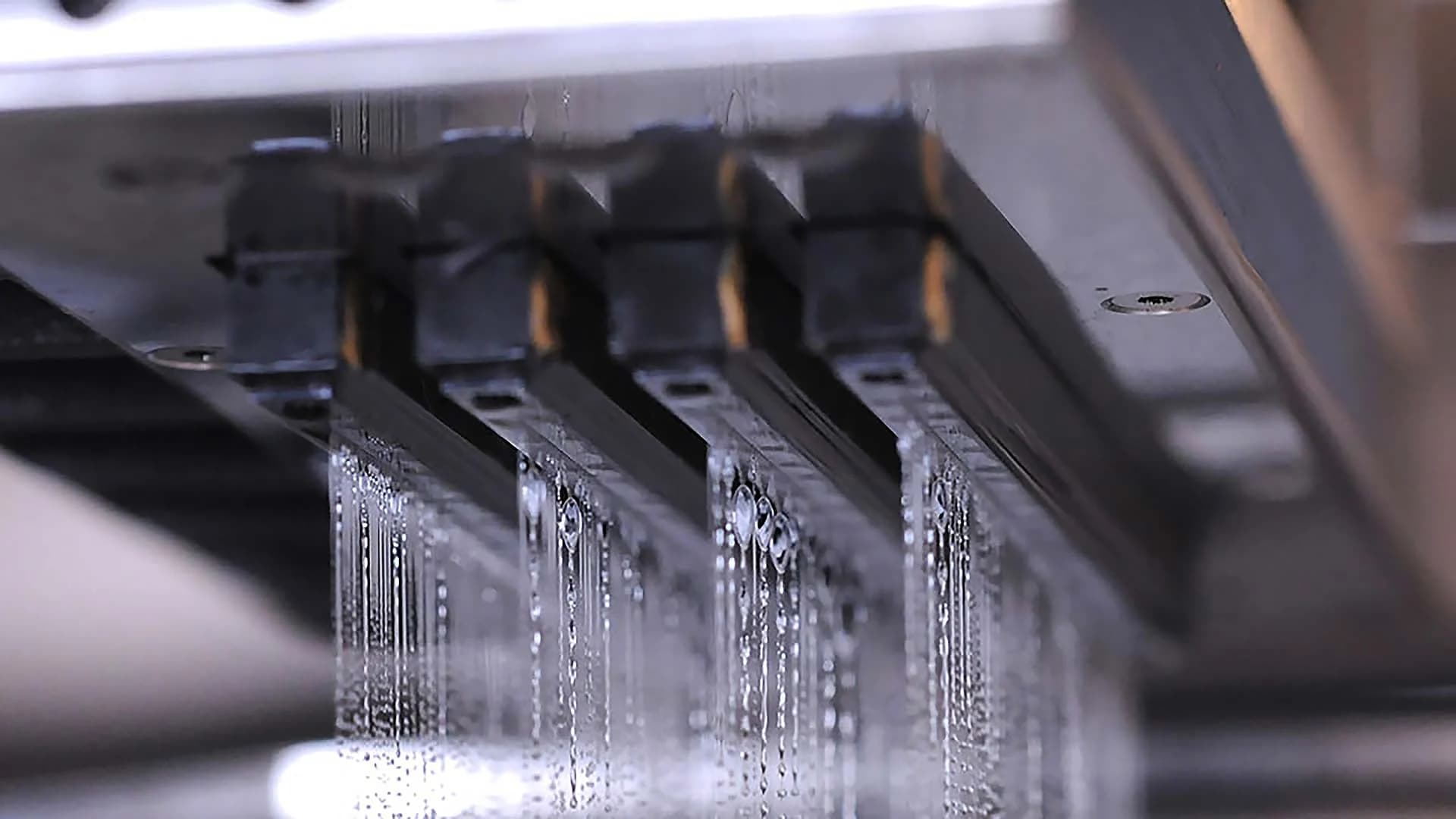
Binder Jetting
Binder jetting enables efficient production of complex metal parts by selectively depositing binder onto metal powder, followed by debinding and sintering. It is well suited for complex geometries, batch production, and applications where higher production efficiency is required.
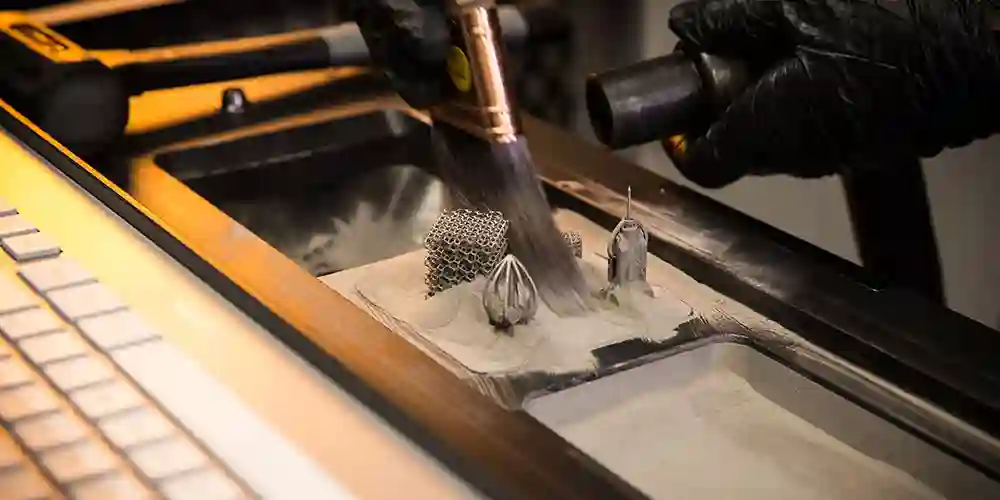
DMLS / SLM Printing
SLM uses a high-power laser to fully melt metal powder layer by layer, producing dense, high-strength parts with complex geometries, internal channels, and lightweight structures. Ideal for functional prototypes and high-performance metal components.
What Is Metal 3D Printing?
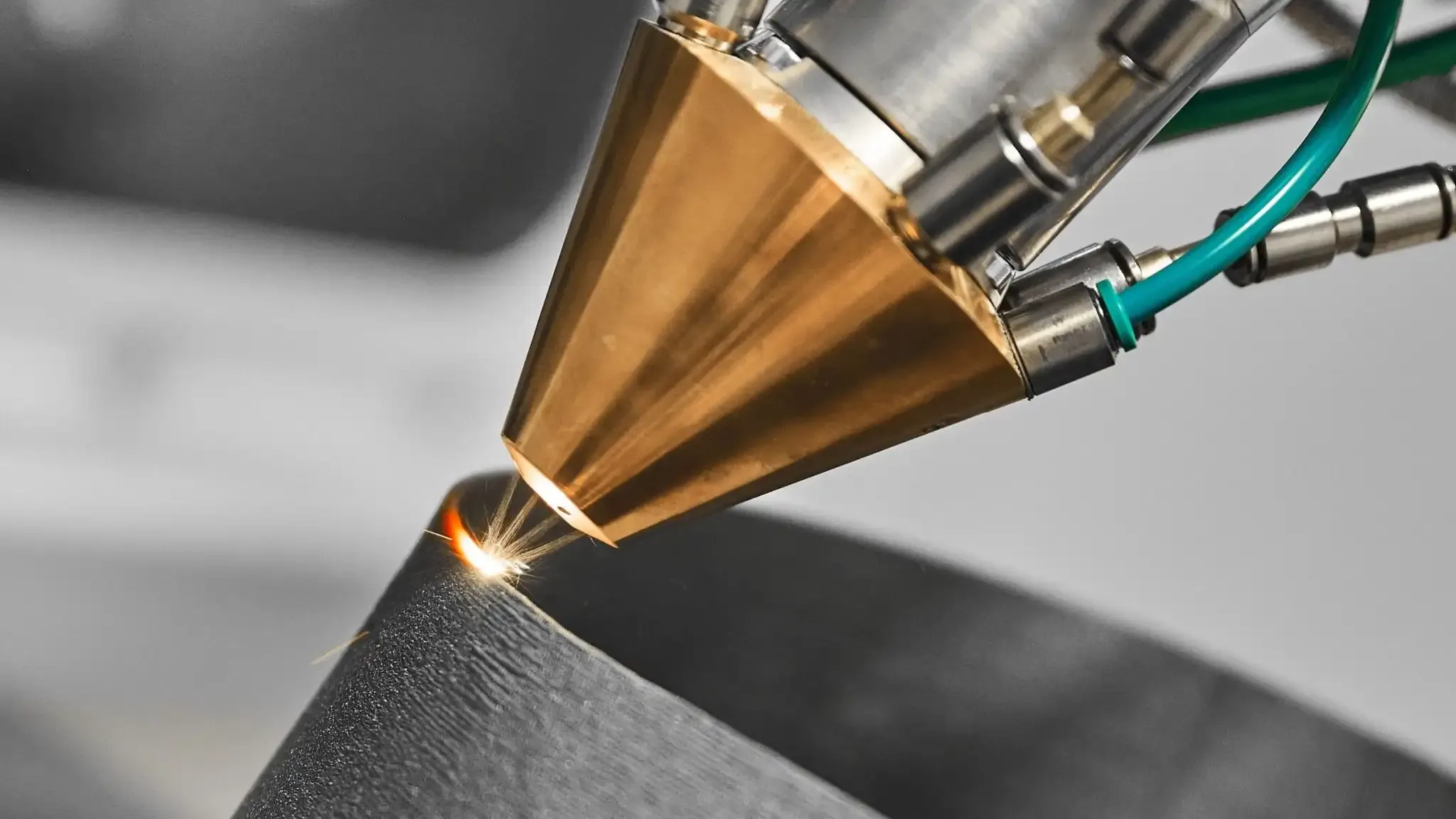
Metal 3D printing is an additive manufacturing process that builds metal parts directly from a digital 3D model, layer by layer. Unlike CNC machining, which removes material from a solid block, metal 3D printing adds material only where it is needed. This makes it especially useful for complex geometries, internal channels, lightweight lattice structures, prototypes, and low-volume production parts. The most common industrial metal 3D printing technology is Laser Powder Bed Fusion (LPBF), often referred to as SLM (Selective Laser Melting) or DMLS (Direct Metal Laser Sintering).
What Is Metal 3D Printing?
Metal 3D printing is an additive manufacturing process that builds metal parts directly from a digital 3D model, layer by layer. Unlike CNC machining, which removes material from a solid block, metal 3D printing adds material only where it is needed. This makes it especially useful for complex geometries, internal channels, lightweight lattice structures, prototypes, and low-volume production parts. The most common industrial metal 3D printing technology is Laser Powder Bed Fusion (LPBF), often referred to as SLM (Selective Laser Melting) or DMLS (Direct Metal Laser Sintering).
When to Choose Metal 3D Printing
Complex Internal Channels
Produce enclosed fluid paths, cooling channels and internal features that cutting tools cannot access.
Lightweight Structures
Replace unnecessary solid material with lattices, hollow sections and topology-optimized forms while maintaining the required load paths.
Part Consolidation
Combine several machined, welded or fastened components into a single printed part with fewer joints and assembly steps.
Low-Volume Metal Parts
Manufacture specialized metal components without the cost and lead time of dedicated molds or production tooling.
Frequent Design Changes
Update the CAD model between builds without modifying hard tooling, making design iterations easier to manage.
Difficult-to-Machine Geometry
Produce undercuts, organic surfaces and compact internal features that would otherwise require multiple setups or separate components.
Metal 3D Printing Factory and Equipment
Get QuoteTigerHubs operates 40+ SLM systems with a maximum stated build envelope of 600 × 500 × 450 mm. Capacity planning covers prototypes, multi-part builds and repeat batches, while support removal, heat treatment, CNC finishing and inspection are coordinated through one project workflow.


Metal 3D Printing Design Guidelines
| Design Item | General Recommendation |
|---|---|
| Maximum Build Size | 600 × 500 × 450 mm |
| Dimensional Tolerance | ±0.2 mm |
| Standard Surface Roughness | Ra 3.2–6.3 μm |
| Minimum Wall Thickness | 0.8 mm |
| Layer Thickness | 30–50 μm |
| Recommended Overhang | Greater than 45° where possible |
| Internal Channels | Use teardrop or diamond forms for larger channels |
| Internal Fillets | Avoid sharp internal corners |
| Powder Removal | Include accessible powder-removal openings |
| Support Structures | Required for heat transfer and build stability |
| Secondary Processing | CNC machining, polishing, heat treatment and finishing |
| Machining Allowance | Add material to critical surfaces requiring CNC finishing |
Metal 3D Printing Materials
TigerHubs offers a wide range of metal 3D printing materials. Our engineers select the material best suited to your project based on factors such as weight, strength, corrosion resistance, temperature resistance, electrical conductivity, and required post-processing.
Aluminum AlSi10Mg
A lightweight aluminum alloy with good thermal performance and strength-to-weight characteristics.

Best For
Lightweight housings, brackets, heat-transfer components and mobility applications
Secondary Processing and Surface Treatment for Metal 3D Printing
Metal 3D printed parts can be machined, heat treated and surface finished after printing to improve dimensional accuracy, mechanical performance, surface quality and appearance. The final processing route is selected according to the alloy, geometry and application requirements.

Support Removal
Temporary supports are separated using wire cutting, mechanical tools or CNC machining, depending on their position and size.

Wire EDM Cutting
Wire EDM separates printed parts from the build plate and removes supports in areas requiring controlled cutting.

CNC Machining
Milling and turning improve critical dimensions, sealing faces, bearing locations and other precision features.

Drilling, Reaming and Tapping
Holes and threads can be finished after printing to achieve the required diameter, position and thread quality.

Grinding and Lapping
Precision grinding or lapping improves flatness, parallelism and surface condition on critical contact areas.

Sandblasting
Removes loose particles and support marks while creating a more consistent matte surface.

Anodizing
Adds a protective oxide layer to compatible aluminum parts, improving corrosion resistance and providing optional color finishes.

Powder Coating
Adds a durable colored coating that provides surface coverage and environmental protection.
Quality Assurance for Metal 3D Printing
Every TigerHubs metal 3D printing project follows a defined quality plan—from material and build preparation through process monitoring, post-processing, final inspection and documentation—to verify that each part meets the approved dimensional, material, surface and application requirements.
Before Production
We verify the metal powder grade, batch information and available material documentation, then review the CAD model and drawing for tolerances, critical features, build orientation, support structures, powder-removal access and machining allowance. The selected machine, build platform and processing parameters are confirmed before printing begins.
During & After Production
Printing conditions are monitored throughout the build, and recovered parts are checked for distortion, incomplete features and surface irregularities. After support removal and secondary processing, critical dimensions, surface condition and specified material properties are verified using suitable calibrated inspection and testing equipment.
Documentation & Certification
Depending on the agreed quality requirements, we can provide material certificates, dimensional inspection reports, First Article Inspection reports, Certificates of Conformance, heat-treatment records, surface-treatment records and batch traceability documents. TigerHubs operates under ISO 9001:2015, ISO 13485 and ISO 14001:2015 management systems.

Metal 3D Printing Applications by Industry
TigerHubs provides metal additive manufacturing for industries that require complex geometries, lightweight structures, internal channels, and functional metal components. With SLM capabilities for parts up to 600 × 500 × 450 mm, we support rapid prototyping and low-volume production for demanding applications.

Aerospace
Metal 3D printing enables lightweight, high-strength aerospace components with complex geometries that are difficult to produce using conventional machining.
- Common parts
- Structural brackets, lightweight housings, ducts, mounts, heat-management components.
- Best for
- Lightweight structures, topology-optimized parts, complex internal features, and low-volume high-performance components.

Robotics
Metal additive manufacturing is well suited for compact, lightweight robotic components that require complex shapes, integrated features, and high structural efficiency.
- Common parts
- Robot joints, actuator housings, end-effectors, lightweight brackets, structural frames.
- Best for
- Complex geometries, lightweight designs, integrated assemblies, and rapid design iteration.

Renewable Energy
Metal 3D printing supports complex functional components used in energy systems where weight reduction, internal channels, and design flexibility are important.
- Common parts
- Heat exchangers, fluid manifolds, turbine-related components, motor components, custom housings.
- Best for
- Internal flow channels, thermal-management features, complex metal structures, and low-volume production.

Medical
Metal 3D printing is suitable for complex medical equipment components that require small production quantities, intricate geometry, and high design flexibility.
- Common parts
- Equipment components, instrument housings, custom fixtures, structural parts, specialized metal prototypes.
- Best for
- Complex custom parts, rapid design iteration, low-volume production, and application-specific geometries.

Industrial Equipment
Metal additive manufacturing supports specialized industrial components where conventional machining would require multiple operations or complex assemblies.
- Common parts
- Manifolds, custom housings, tooling components, brackets, heat-management parts.
- Best for
- Internal channels, consolidated assemblies, complex functional parts, and low-volume custom production.
Why choose TigerHubs for metal 3D printing?
TigerHubs provides an end-to-end metal 3D printing solution—from prototype validation and design optimization to volume production, post-processing, inspection and delivery.
Scalable SLM Capacity
More than 40 SLM systems provide scheduling flexibility for prototypes, nested builds and repeat low-volume requirements.
DFAM Before Production
Orientation, supports, thermal concentration, trapped powder and machining access are reviewed before build time and material are committed.
Additive Plus Precision Finishing
Critical interfaces can move from printing to heat treatment, wire EDM, CNC machining and surface finishing through a coordinated route.
Requirements Stay Connected
The same drawing and quality plan follow the part from build preparation through final inspection and documentation.
Metal 3D Printed Parts Gallery


Image 1 of 6
Our Metal 3D Printing Process

Requirements and DFAM Review
We review the 3D model, technical drawing, alloy, quantity, application and acceptance criteria. Our engineers evaluate print feasibility, critical tolerances, wall thickness, internal channels and features that may require design optimization or secondary machining.

Build Preparation
After the production route is approved, we define part orientation, support structures, nesting, layer thickness, powder-removal access and machining allowance. The build file, material batch, machine assignment and inspection plan are then prepared for production.
Printing and Part Recovery
The SLM system melts metal powder layer by layer under controlled processing conditions. When the build is complete, the parts are cooled, recovered from the powder bed, cleaned and moved through stress relief, build-plate separation and support removal as required.
Post-Processing, Inspection and Delivery
The parts receive the specified heat treatment, HIP, CNC machining and surface finishing. Critical dimensions and agreed quality requirements are verified before the inspection records are completed, the parts are securely packed and the finished order is shipped.
Frequently Asked Questions
Learn MoreSLM and DMLS are widely used commercial terms for laser powder bed fusion of metal. The naming varies by supplier and machine platform; the more important project variables are alloy, parameter set, achievable density, build orientation, heat treatment and inspection requirements.
The supplied capability data gives ±0.2 mm as a typical dimensional tolerance. Actual results depend on part size, orientation, alloy and geometry. Add machining allowance to sealing faces, precision bores, threads and other critical interfaces that need tighter control.
The stated typical roughness is Ra 3.2-6.3 μm before optional grinding or polishing. Orientation, supports and geometry influence the actual surface. Media blasting, machining, polishing, electropolishing and coatings can be specified where compatible with the alloy and function.
Yes. The same workflow can support a one-off functional prototype, a multi-part validation build or a repeat low-volume order. Build layout, inspection level and finishing route are adjusted to the quantity and application.
Send a STEP file for dimensional review and a PDF drawing that identifies material, quantity, critical tolerances, surface finish, heat treatment, inspection and documentation needs. STL or 3MF files can also be reviewed when they are the available source geometry.
Start Your Metal 3D Printing Project
Bring your complex metal designs to life with TigerHubs. From functional prototypes to production-ready parts, our metal 3D printing services offer design flexibility, engineering support, and reliable manufacturing quality. Upload your CAD files to get a custom quote or discuss your project with our engineers.