

Custom Injection Molding Services
From DFM and precision mold tooling to T1 validation and repeat production, TigerHubs delivers custom plastic parts with controlled tooling, documented quality and scalable manufacturing in China.
- ISO 9001:2015, ISO 13485, ISO14001:2015, IATF 16949:2016 certified
- From prototyping to mass production
- Reduce your project costs by 15%–20%
Tigerhubs Injection Molding Capabilities
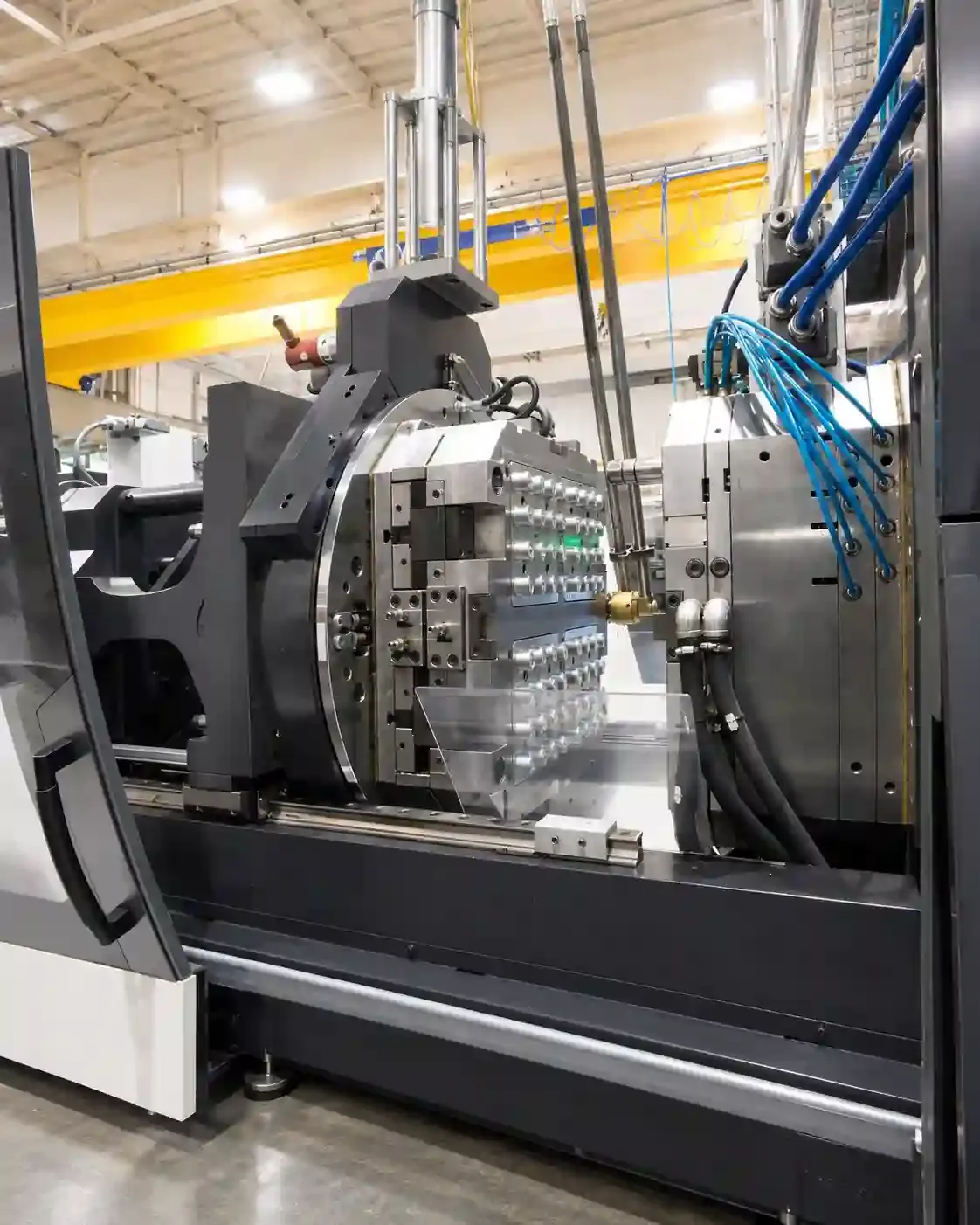
Injection Mold Manufacturing
Prototype and production molds are engineered around expected volume, resin, part complexity, mold life, surface requirements and production targets. Available tooling strategies range from short-life prototype molds to Class 101 production tooling designed for more than 1,000,000 cycles. Best for: Products moving from design validation into pilot, bridge or repeat production.
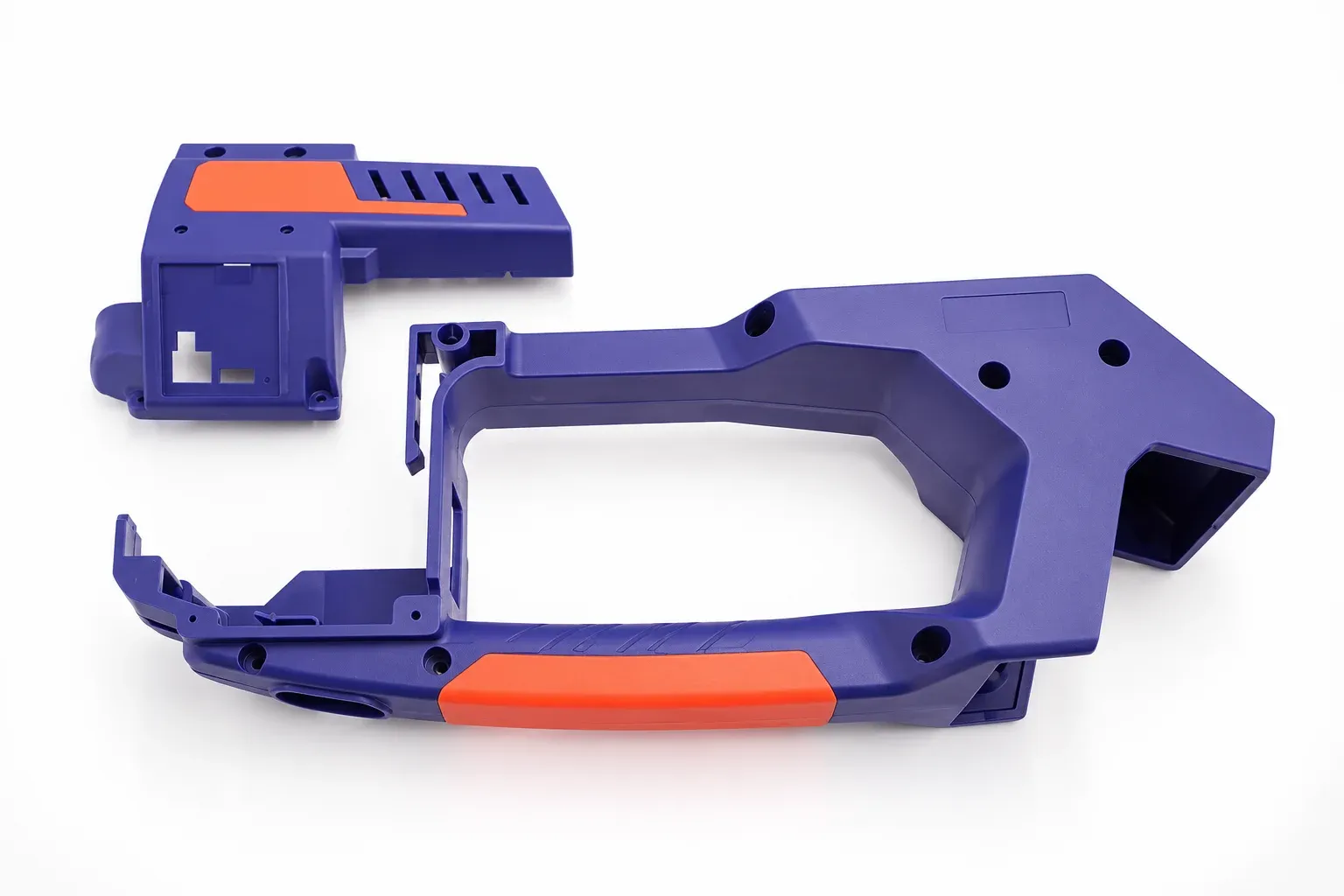
Overmolding
A secondary material can be molded over a base component to add grip, cushioning, sealing, protection or ergonomic properties. Best for: Handles, grips, seals, protective surfaces and multi-material consumer or industrial components.
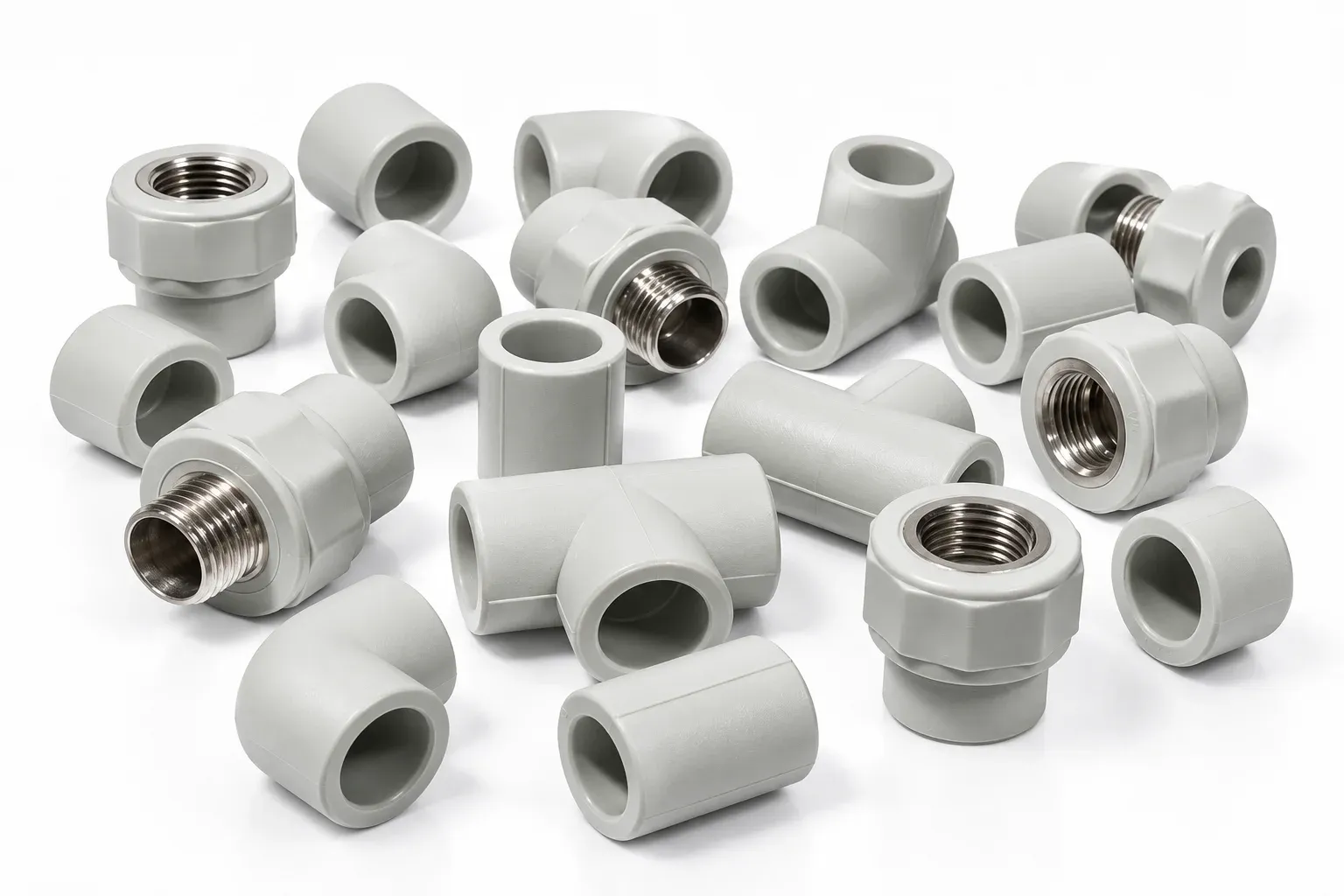
Insert Molding
Metal or other pre-manufactured inserts can be incorporated into molded components to create integrated functional features. Best for: Threaded inserts, electrical contacts, reinforced mounting points and components requiring metal-to-plastic integration.
Injection Molding Tolerance Capability
Maintain dimensional consistency from mold machining through production. TigerHubs supports precision injection molding with controlled tooling, process optimization, and inspection for prototypes and production parts.
| Standards | Description |
|---|---|
| Mold cavity machining tolerance | ±0.02 mm |
| Machining Tolerance | ±0.05mm~±0.01mm |
| Maximum part size | 1200 × 1000 × 500 mm |
| Minimum part size | 5 × 5 × 5 mm |
| Recommended wall thickness | 0.5-5.0 mm |
| Draft angle | 0.5°-2.0° |
| Mold cavities | Single-cavity, multi-cavity and family-mold options |
| Undercuts | Side actions, lifters or hand-loaded solutions as applicable |
| Tooling Classes | Class 105 through Class 101 |
| T1 timing | Typically 10-18 working days |
Our Injection Molding Factory
Get QuoteTigerHubs supports injection molding programs from tooling and T1 sampling to low-volume and repeat production. Backed by 15+ years of manufacturing experience, 165+ professional staff, 40+ technical engineers, and 50+ quality professionals, our manufacturing team coordinates mold engineering, molding, inspection, and production planning in one workflow. This integrated capability helps customers shorten supplier handoffs, maintain consistent quality, and scale production more reliably as demand grows.


0+years15+years
Manufacturing Experience
0,0000+100,0000+
Parts Manufactured
0+165+
Professional Staff
0%98%
On-Time Delivery
0+units100+units
Injection Molding Machines
Tigerhubs Injection Molding Working Principle
From CAD File to Production-ready Molded Parts
Upload CAD Files & Requirements
Send your 3D CAD model, drawing, material requirements, expected quantity and any critical specifications.
Engineering & DFM Review
TigerHubs reviews geometry, wall thickness, draft, undercuts, critical dimensions, material and tooling considerations.
Select the Tooling Strategy
Tooling class, material, cavity count and mold architecture are selected around production needs.
Mold Manufacturing
The mold is machined, finished, assembled and prepared for initial sampling.
T1 Sample Production
Initial molded parts are produced and evaluated for dimensions, appearance, filling, ejection and functionality.
Injection Molding Production
Approved tooling and process requirements are used for the required production quantity.
Quality Inspection
Critical requirements are checked according to the agreed inspection plan.
Packaging & Global Delivery
Parts are packaged according to product requirements and prepared for international shipment.
Injection Molding Materials
Choose from standardized mold finishes and textures to achieve the required appearance, gloss, touch, release performance, and surface consistency for your injection-molded parts.
ABS
Balanced impact resistance, surface appearance and processability for housings, covers and consumer products.

Polyethylene Terephthalate (PET)
Strength, wear resistance and electrical insulation for technical components requiring controlled processing and moisture management.

Injection Molding Surface Finishes
Choose from protective, cosmetic, and performance finishes selected for your material, part geometry, and end-use requirements.

SPI Surface Finishes
SPI finishes use standardized polishing methods to create surfaces ranging from mirror-gloss to matte textures. The required finish is applied directly to the mold cavity and transferred to each molded part.
- Available Grades
- SPI A1–A3 · B1–B3 · C1–C3 · D1–D3
- Surface Range
- Mirror gloss → Semi-gloss → Matte → Textured
- Best For
- Clear parts, cosmetic housings, consumer electronics, medical devices, and products with strict appearance requirements.

VDI Surface Finishes
VDI finishes use controlled EDM texturing to create consistent matte and textured surfaces directly in the mold. Different VDI grades provide progressively rougher surface textures.
- Available Grades
- VDI 12–45
- Surface Range
- Fine matte → Medium texture → Coarse texture
- Best For
- Parts requiring reduced glare, improved grip, scratch masking, or a consistent technical texture.
Our Injection Molding Solutions
TigerHubs provides end-to-end injection molding support from prototype tooling to high-volume production. Our manufacturing resources are backed by 165 employees, 40+ technical engineers, 50+ quality professionals, advanced machining and inspection equipment, and tooling options supporting mold life from under 500 to over 1,000,000 cycles. With 100,000+ parts manufactured, 7–15 day standard lead times, and 20% reserved capacity for urgent orders, we help customers scale from design validation to stable repeat production.


Rapid Prototyping
Quickly validate part design, material performance and assembly fit before moving into production tooling.
Production Capacity
1-1000 pcs
Lead Time
1-3 days
Best For
Design validation, functional testing, engineering samples and pre-production verification.
Injection Molding Applications by Industry
TigerHubs provides custom injection molding for industries that require repeatable plastic components, complex geometries, functional housings, and scalable production. From prototype tooling to high-volume manufacturing, we support a wide range of engineering plastics and production requirements.

Automotive
Injection molding produces repeatable plastic components for automotive systems, interiors, exteriors, and functional assemblies.
- Common parts
- Interior trim, brackets, housings, covers, clips, connectors, air ducts.
- Best for
- High-volume production, complex plastic geometries, lightweight components, and consistent part quality.

Robotics
Injection molding helps produce lightweight and repeatable plastic components for robotic systems, control modules, and moving assemblies.
- Common parts
- Robot covers, actuator housings, sensor housings, cable covers, brackets, protective shells.
- Best for
- Lightweight housings, complex shapes, integrated features, and repeat production.

Aerospace
Injection molding can produce lightweight polymer components for aerospace equipment and supporting systems where material selection and dimensional consistency are important.
- Common parts
- Equipment covers, brackets, housings, clips, cable-management components.
- Best for
- Lightweight plastic parts, complex geometries, repeatable production, and specialized engineering plastics.

Industrial Equipment
Injection molding provides durable plastic components for industrial machinery, equipment housings, and functional assemblies.
- Common parts
- Machine covers, control housings, handles, protective guards, brackets, cable-management parts.
- Best for
- Functional plastic components, complex housings, repeat production, and integrated features.

Construction Machinery
Injection molding supports plastic components used in equipment controls, protective systems, and operator interfaces.
- Common parts
- Control housings, protective covers, handles, knobs, brackets, cable covers.
- Best for
- Durable plastic components, functional housings, impact-resistant parts, and repeat production.

Medical
Injection molding enables consistent production of plastic components for medical equipment and devices, with material and quality requirements defined for each application.
- Common parts
- Device housings, instrument components, trays, covers, handles, disposable components.
- Best for
- High-repeatability parts, complex geometries, precision components, and scalable production.

Rail Transit
Injection molding provides lightweight plastic components for rail vehicle interiors, equipment systems, and passenger-facing assemblies.
- Common parts
- Interior panels, covers, brackets, handles, housings, cable-management components.
- Best for
- Lightweight parts, durable housings, complex molded features, and repeat production.
Why Choose TigerHubs for Injection Molding?
From early engineering decisions to production delivery, every stage is built around clarity, accountability, and measurable quality.
Engineering Before Tooling
TigerHubs reviews design, material, critical dimensions and moldability before tooling begins.
Tooling Matched to Production Volume
From Class 105 prototype tools to Class 101 production molds, tooling investment can be aligned with expected product life.
Responsive Project Support
TigerHubs targets fast technical communication, including rapid inquiry response and engineering feedback for manufacturing projects.
Prototype-to-Production Manufacturing
Development prototypes, tooling, molding and related manufacturing processes can be coordinated within the same broader manufacturing organization.
Manufacturing and Quality in One Workflow
Engineering requirements, T1 validation, production and inspection remain connected throughout the program.
Support for Complex Supply Chains
TigerHubs combines its Shenzhen manufacturing operation with audited manufacturing resources across China.
Quality Assurance for Injection Molded Parts
Quality is built into every stage of our injection molding process—from DFM and mold validation to controlled production and final part approval. TigerHubs defines critical dimensions, appearance standards, material requirements and functional checks before production, helping customers receive consistent molded parts that meet drawing and assembly requirements.
Engineering Validation Before Production
We review wall thickness, draft angles, gates, cooling, shrinkage and critical dimensions before tooling. T1 samples are checked for dimensions, appearance, fit and function before the mold is approved for production.
Controlled and Traceable Molding
Approved resin grades, material batches and key molding parameters are controlled throughout production. Mold number, cavity number, production batch and inspection records remain traceable for repeat orders and issue investigation.
Inspection Based on Part Requirements
Critical dimensions, cosmetic surfaces and functional features are inspected against the approved drawing and master sample. Dimensional reports, CMM inspection, FAI, Cpk studies or PPAP documentation can be provided when specified for the project.

Our Custom Injection Molded Parts


Image 1 of 6
Frequently Asked Questions
Learn MoreInjection molding cost is mainly determined by tooling complexity, mold material, cavity count, part size, resin, surface finish, production volume and inspection requirements. The initial mold creates a higher upfront cost than processes such as CNC machining or 3D printing, but the unit cost normally decreases significantly as production volume increases. The most accurate way to estimate cost is to review the CAD model together with the expected lifetime production quantity.
The practical minimum depends on the tooling strategy and commercial requirements. Prototype injection molds can support very small validation runs, while production tooling becomes more economical as quantity increases. TigerHubs evaluates tooling cost and piece-part economics together instead of applying one fixed MOQ to every program.
Common materials include: ABS, PC, PC/ABS, PP, PE, HDPE, LDPE, PA, POM, PMMA, PBT, PET, TPU, TPE, PPS, PEEK and PEI. Additional grades can be evaluated based on strength, temperature, chemical resistance, appearance, electrical requirements and project-specific needs.
A common design reference is approximately 0.5–5.0 mm, depending on material and geometry. Uniform walls are generally preferred because large thickness changes can increase sink, warpage, cooling imbalance and cycle time.
A general starting range is approximately 0.5°–2.0° per side. Deep features, textured mold surfaces and certain materials may require greater draft. Final draft should be reviewed during DFM.
Low-volume injection molding can be used for pilot production, bridge manufacturing, product launches and demand validation before committing to long-life tooling or higher production volumes.
Yes. T1 sampling is a critical step in the TigerHubs tooling workflow. Initial molded parts can be reviewed for dimensions, appearance, mold filling, ejection, sink, warpage, flash, weld lines and functional requirements before repeat production begins.
Yes. DFM review can evaluate wall thickness, draft, undercuts, gates, parting lines, ejection, ribs, bosses, cosmetic areas and critical dimensions before tooling release. The objective is to identify manufacturing risks while they are still easier and less expensive to change.
Yes, multi-cavity and family-mold strategies can be evaluated when production requirements justify them. Cavity count depends on part geometry, annual volume, mold size, filling balance, required production rate and tooling budget.
Insert molding and overmolding can be evaluated for compatible part designs and material combinations. These processes can integrate threads, electrical components, reinforcing elements, grips, seals or other functions into the molded component.
Start Your Injection Molding Project
Turn your CAD design into a production-ready molded part
Whether you are validating a new product, preparing a pilot build or scaling an established design, TigerHubs can help evaluate the right combination of material, tooling, molding process and quality control.