

Stable Sand Molds. Reliable Metal Castings.
Custom Dry Sand Casting Services
TigerHubs provides custom dry sand casting services for large, complex, and demanding metal components. With controlled mold drying and engineering-driven manufacturing, we help improve mold stability, reduce moisture-related casting risks, and support reliable production of custom metal castings.
- Enhanced Mold Stability
- Reduced Moisture-Related Risks
- Custom Industrial Castings
What Is Dry Sand Casting?
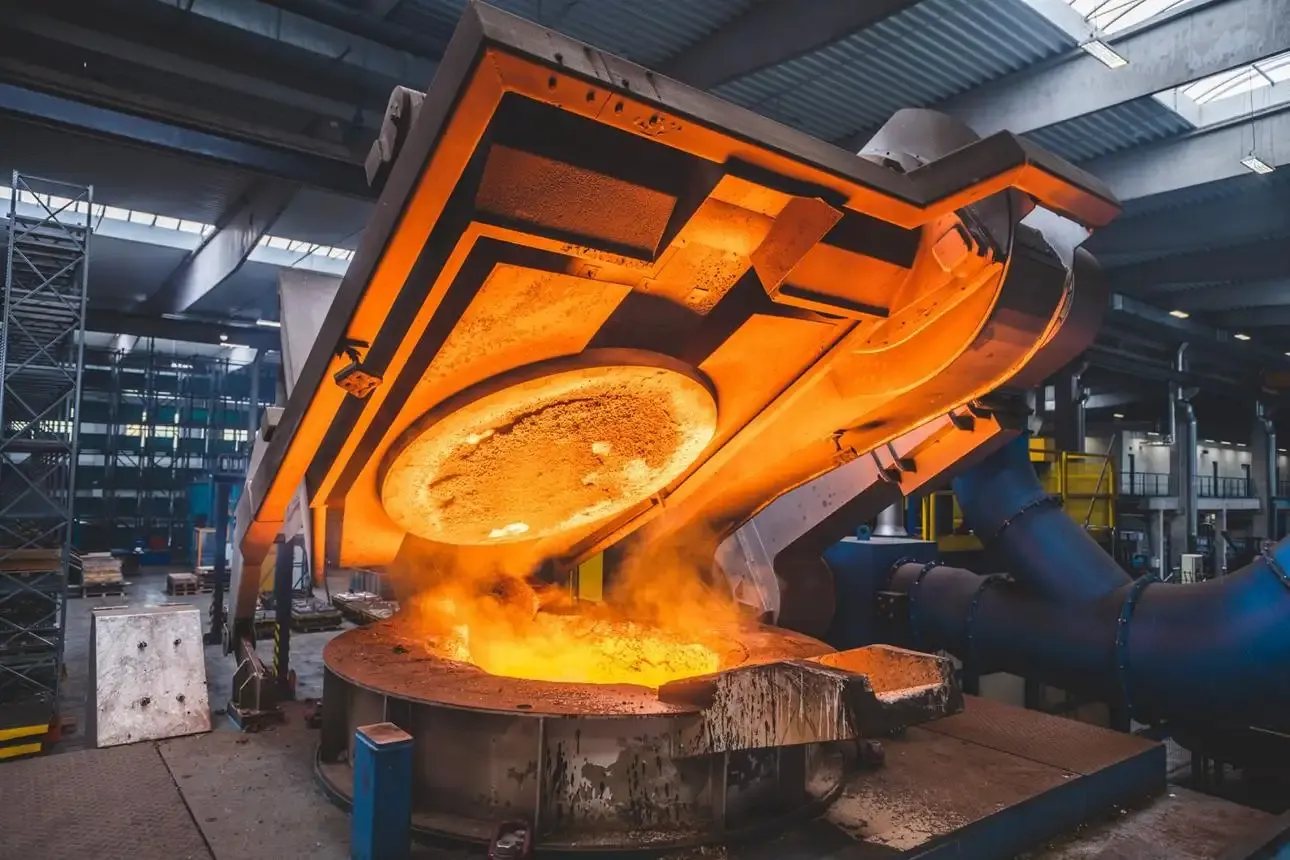
Dry sand casting is a metal casting process in which formed sand molds are heated to remove moisture before molten metal is poured. This drying treatment increases mold strength and stability while reducing moisture-related casting risks. The process is particularly suitable for selected large, heavy, and complex metal castings requiring stronger mold support.
Key Characteristics of Dry Sand Casting
Improved Mold Strength
Dried sand molds provide greater rigidity to help maintain cavity integrity during pouring.
Reduced Mold Moisture
Removing moisture before pouring helps limit water-related gas formation and casting defects.
Suitable for Heavy Castings
Provides an alternative molding approach for selected large components exposed to demanding pouring conditions.
What Is Dry Sand Casting?
Dry sand casting is a metal casting process in which formed sand molds are heated to remove moisture before molten metal is poured. This drying treatment increases mold strength and stability while reducing moisture-related casting risks. The process is particularly suitable for selected large, heavy, and complex metal castings requiring stronger mold support.
Key Characteristics of Dry Sand Casting
Improved Mold Strength
Dried sand molds provide greater rigidity to help maintain cavity integrity during pouring.
Reduced Mold Moisture
Removing moisture before pouring helps limit water-related gas formation and casting defects.
Suitable for Heavy Castings
Provides an alternative molding approach for selected large components exposed to demanding pouring conditions.
Our Dry Sand Casting Capabilities & Technical Specifications
Explore TigerHubs' dry sand casting capabilities for custom industrial metal parts, including casting weight, dimensional tolerances, wall thickness, and surface finish. Our engineering team evaluates each project against material, geometry, and manufacturing requirements to determine achievable specifications.
| Capability | Technical Specifications |
|---|---|
| Casting Materials | Gray Iron, Ductile Iron, Carbon Steel, Alloy Steel, Aluminum Alloys |
| Maximum Casting Weight | Up to 2,000 kg |
| Casting Dimensions | Based on mold size, drying equipment, and handling capacity |
| As-Cast Dimensional Tolerance | ISO 8062-3:2023; DCTG 10–12 |
| Minimum Wall Thickness — Cast Iron | 5–8 mm |
| Minimum Wall Thickness — Cast Steel | 6–10 mm |
| Minimum Wall Thickness — Aluminum | 4–6 mm |
| Draft Angle | Typically 1°–3° |
| As-Cast Surface Roughness | Project-specific; depends on molding sand, coating, and alloy |
| Machining Allowance | Determined by casting size, material, and required finished dimensions |
| Production Volume | Prototypes, low-volume, and repeat production, subject to project review |
| Secondary Machining | CNC machining available for critical features |
Why Choose TigerHubs for Dry Sand Casting?
TigerHubs combines engineering expertise with flexible manufacturing resources to support demanding dry sand casting projects. From process selection to production coordination, we help customers reduce manufacturing risks, improve project efficiency, and achieve cost-effective casting solutions.
Engineering-Driven Casting Solutions
We assess part geometry, casting requirements, and mold suitability to recommend practical dry sand casting solutions.
Flexible Manufacturing Resources
Our manufacturing network helps match industrial dry sand casting projects with suitable foundry capabilities and production resources.
Risk-Focused Project Planning
We identify potential mold stability, moisture-related, and casting feasibility concerns early in project planning.
Coordinated Manufacturing Management
TigerHubs coordinates engineering requirements, production arrangements, and supplier communication throughout the casting project.
Our Dry Sand Casting Manufacturing Process
Our dry sand casting process transforms custom designs into metal castings through sand mold preparation, controlled drying, molten metal pouring, and finishing. Unlike green sand molding, the formed molds are dried before pouring to improve mold stability and reduce moisture-related risks.

Pattern & Mold Design
Casting patterns and mold layouts are prepared according to part geometry, alloy shrinkage, and required casting features.

Sand Mold Preparation
Prepared molding sand is formed around the pattern to create the mold cavity, with cores added where internal features are required.

Controlled Mold Drying
The formed sand molds are dried under appropriate heating conditions to remove moisture and develop the required mold stability.

Mold Assembly & Metal Pouring
Dried mold sections and cores are assembled as required, then molten metal is poured into the cavity and allowed to solidify.

Shakeout & Casting Cleaning
After cooling, the casting is removed from the sand mold, and excess sand, gates, and risers are removed.

Finishing & Final Inspection
Castings undergo required surface cleaning, optional machining, and final inspection before delivery.
Design Guidelines for Dry Sand Castings
Effective dry sand casting design balances part geometry, mold stability, and solidification requirements. TigerHubs helps optimize wall transitions, draft angles, core support, and machining allowances to improve castability, reduce tooling complexity, and minimize unnecessary manufacturing costs.
| Design Factor | Engineering Recommendation | Design Benefit |
|---|---|---|
| Wall Thickness | Maintain uniform sections with gradual thickness transitions. | Improves solidification consistency and reduces hot spots. |
| Draft Angles | Start with 1°–3°, depending on pattern geometry and molding method. | Facilitates pattern removal and protects mold surfaces. |
| Fillets & Radii | Replace sharp internal corners with smooth, generous radii. | Reduces stress concentration and abrupt section changes. |
| Shrinkage Allowance | Apply alloy-specific pattern shrinkage allowances. | Compensates for dimensional changes during cooling. |
| Parting Line | Prefer simple, accessible parting planes where possible. | Reduces mold complexity and tooling costs. |
| Core Support | Provide adequate core prints and stable core positioning. | Improves internal cavity accuracy and mold assembly. |
| Machining Allowance | Add sufficient stock to critical machined surfaces. | Supports final dimensional accuracy without excessive machining. |
| Large Flat Sections | Consider ribs, balanced geometry, and controlled section transitions. | Helps reduce distortion in large castings. |
Metals & Alloys for Dry Sand Casting
TigerHubs supports custom dry sand casting projects across a range of ferrous and non-ferrous alloys. We evaluate material properties, pouring temperatures, and mold compatibility to help customers select suitable metals for reliable casting performance and application requirements.

Gray Cast Iron
Typical Standards: ASTM A48 / EN-GJL
Suitable for rigid industrial castings requiring vibration damping and machinability. Dry sand molding may be considered for large sections requiring additional mold stability.
Best For: Machine bases, equipment frames, and heavy housings.

Ductile Cast Iron
Typical Standards: ASTM A536 / EN-GJS
Combines strength and ductility for load-bearing components. Mold preparation and solidification behavior require careful consideration for heavy or uneven sections.
Best For: Structural housings, heavy brackets, and mechanical supports.

Carbon & Alloy Steel
Typical Standards: ASTM A27 / ASTM A216
Suitable for demanding structural and pressure-related applications. Higher pouring temperatures require compatible refractory sand, mold materials, and casting conditions.
Best For: Heavy-duty components, valve bodies, and industrial structural castings.

Aluminum Casting Alloys
Typical Grades: A356 / AlSi7Mg
A lightweight option for complex industrial components. Dry sand molding feasibility is evaluated against alloy requirements, part geometry, and alternative molding methods.
Best For: Equipment housings, lightweight frames, and custom enclosures.
Dry Sand Casting vs. Green Sand Casting: Which Is Better?
Dry sand casting offers improved mold strength and reduced moisture-related risks, making it suitable for selected large or demanding castings. Green sand casting provides faster mold preparation and lower production costs. The right choice depends on your part requirements, production volume, and budget.

Dry Sand Casting
- Mold Condition
- Dried before pouring
- Mold Strength
- Generally higher after proper drying
- Moisture-Related Risks
- Reduced through mold drying
- Dimensional Stability
- Can benefit from improved mold rigidity
- Surface Finish
- May offer improved surface quality
- Large Castings
- Suitable for selected heavy castings
- Production Speed
- Slower due to additional drying
- Production Cost
- Higher due to drying and handling
- Best Suited For
- Mold-stability-sensitive or demanding castings

Green Sand Casting
- Mold Condition
- Mold remains moist
- Mold Strength
- Relies on moisture-controlled sand bonding
- Moisture-Related Risks
- Requires moisture and gas control
- Dimensional Stability
- Depends on molding and compaction control
- Surface Finish
- Depends on sand quality and molding conditions
- Large Castings
- Suitable with appropriate foundry equipment
- Production Speed
- Faster mold turnaround
- Production Cost
- Generally more economical
- Best Suited For
- High-volume, cost-sensitive production
Dry Sand Casting Foundry Facilities & Production Capacity
TigerHubs coordinates foundry resources for custom dry sand casting projects, with production feasibility assessed against mold drying equipment, handling capacity, and melting facilities. We match casting requirements with suitable manufacturing resources to support large, complex, and heavy metal components.


Annual Manufacturing Capacity
0m²2,000m²
| Capability | Description |
|---|---|
| Mold Drying Chamber Size | 3,000 × 2,000 × 2,000 mm (L × W × H) |
| Maximum Mold Drying Load | Up to 2,000 kg / batch |
| Mold Drying Equipment | 2–4 Industrial Drying Ovens |
| Maximum Mold Handling Weight | Up to 5,000 kg |
| Maximum Pouring Capacity | Up to 3,000 kg / pour |
| Dry Sand Casting Output | 50–100 tons / month |
Trusted by leading brands


Dry Sand Casting Applications Across Industries
TigerHubs supports custom dry sand casting solutions for industrial applications involving large, heavy, and complex metal components. From machinery housings to structural castings, we help manufacturers evaluate suitable casting methods based on part geometry, operating conditions, and production requirements.

Industrial Equipment
Supports large industrial components requiring rigid sand molds and stable casting geometry.
- Typical Parts
- Machine bases, pump housings, compressor bodies

Construction Machinery
Suitable for selected heavy-duty castings where mold strength and metal load are important considerations.
- Typical Parts
- Heavy equipment housings, structural supports, large bearing carriers

Marine
Provides a potential molding solution for large marine components with complex cavities and demanding service conditions.
- Typical Parts
- Marine pump casings, propulsion equipment housings, heavy brackets

Renewable Energy
Supports evaluation of large cast components used in power generation and renewable energy equipment.
- Typical Parts
- Generator housings, gearbox casings, structural mounting components

Rail Transit
Can be considered for selected non-safety-critical rail equipment castings requiring substantial sections and stable mold support.
- Typical Parts
- Equipment housings, heavy mounting frames, machinery supports

Aerospace
May accommodate specialized complex castings where the selected foundry route meets material and application requirements.
- Typical Parts
- Complex aluminum housings, hydraulic equipment bodies, structural enclosures
Frequently Asked Questions About Dry Sand Casting
Learn MoreOften, yes. Reuse depends on pattern condition, mold design, material allowances, and compatibility with the selected molding method. Modifications may be needed.
Full mold drying defines the traditional dry sand process, but not every casting requires it. TigerHubs can evaluate whether alternative molding methods better suit your requirements.
Yes. Exposure to humid conditions or prolonged storage can affect mold condition. Appropriate handling and storage arrangements should be established before pouring.
Yes. Sand cores can form internal passages and recessed features. Core stability, positioning, and compatibility with mold drying must be considered.
Yes, depending on the pattern material and the extent of the change. Minor adjustments may be practical, while significant geometry changes may require new tooling.
It can be, particularly for selected large or specialized castings. Feasibility depends on available drawings, tooling requirements, material specifications, and production resources.
Clearly identify mating surfaces, sealing areas, datum features, and final dimensional requirements on the drawing. This helps distinguish functional requirements from general casting features.
Share your 3D CAD model, technical drawing, alloy specification, estimated quantity, and critical requirements. TigerHubs can assess the appropriate manufacturing approach before quotation.
Get a Custom Dry Sand Casting Quote
Ready to manufacture your custom dry sand castings? Upload your CAD files and share your project requirements with TigerHubs. Our team will assess manufacturing feasibility, review suitable casting options, and prepare a quotation tailored to your specifications.